

ArtificialMeter
Both are for days spent in Claude Code: ArtificialMeter says which subscription has room, Lore reads what the sessions wrote down
Web app
The wiki for all your agents: point it at the markdown folder they write to, and it tells you what changed and what is now true
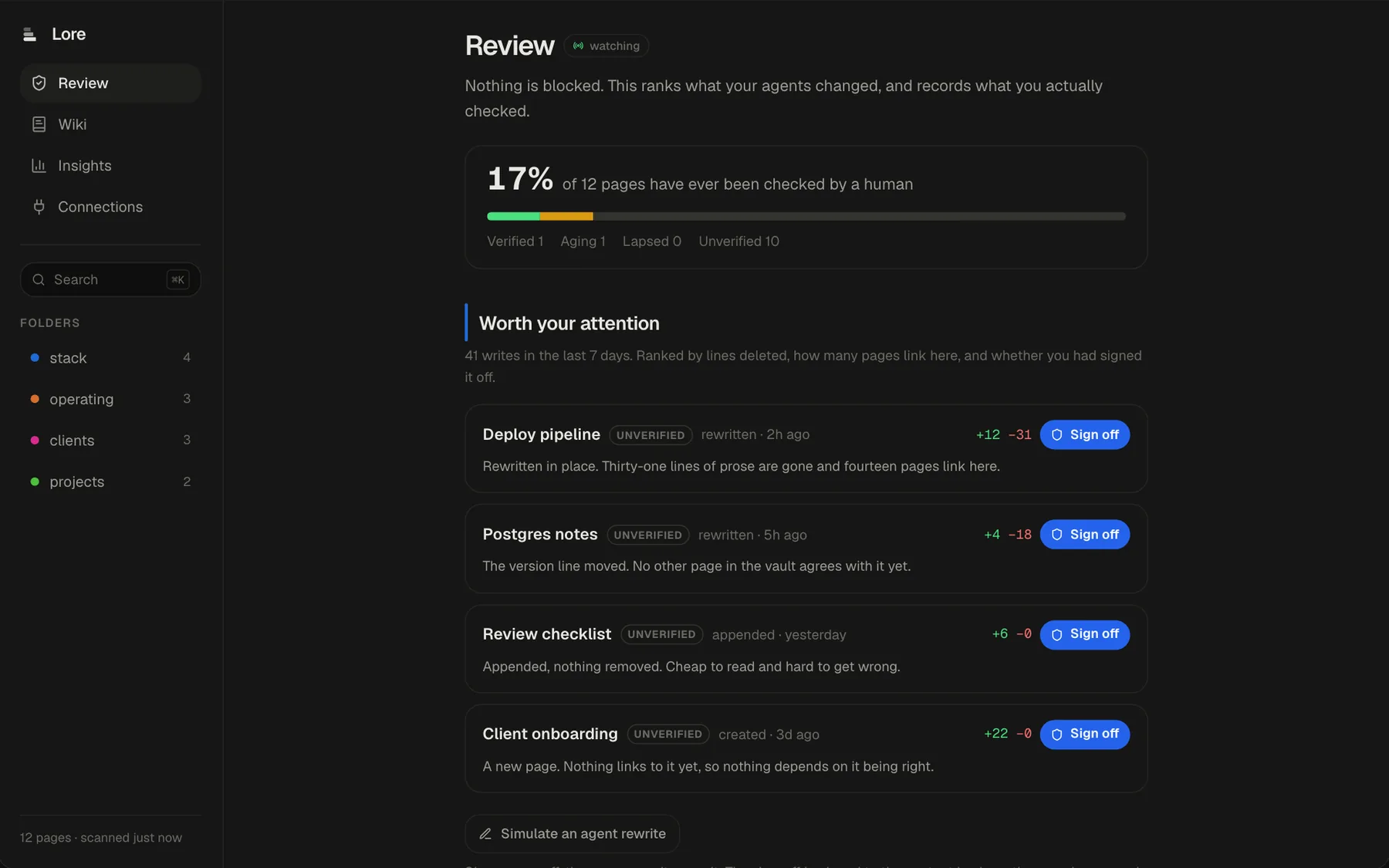
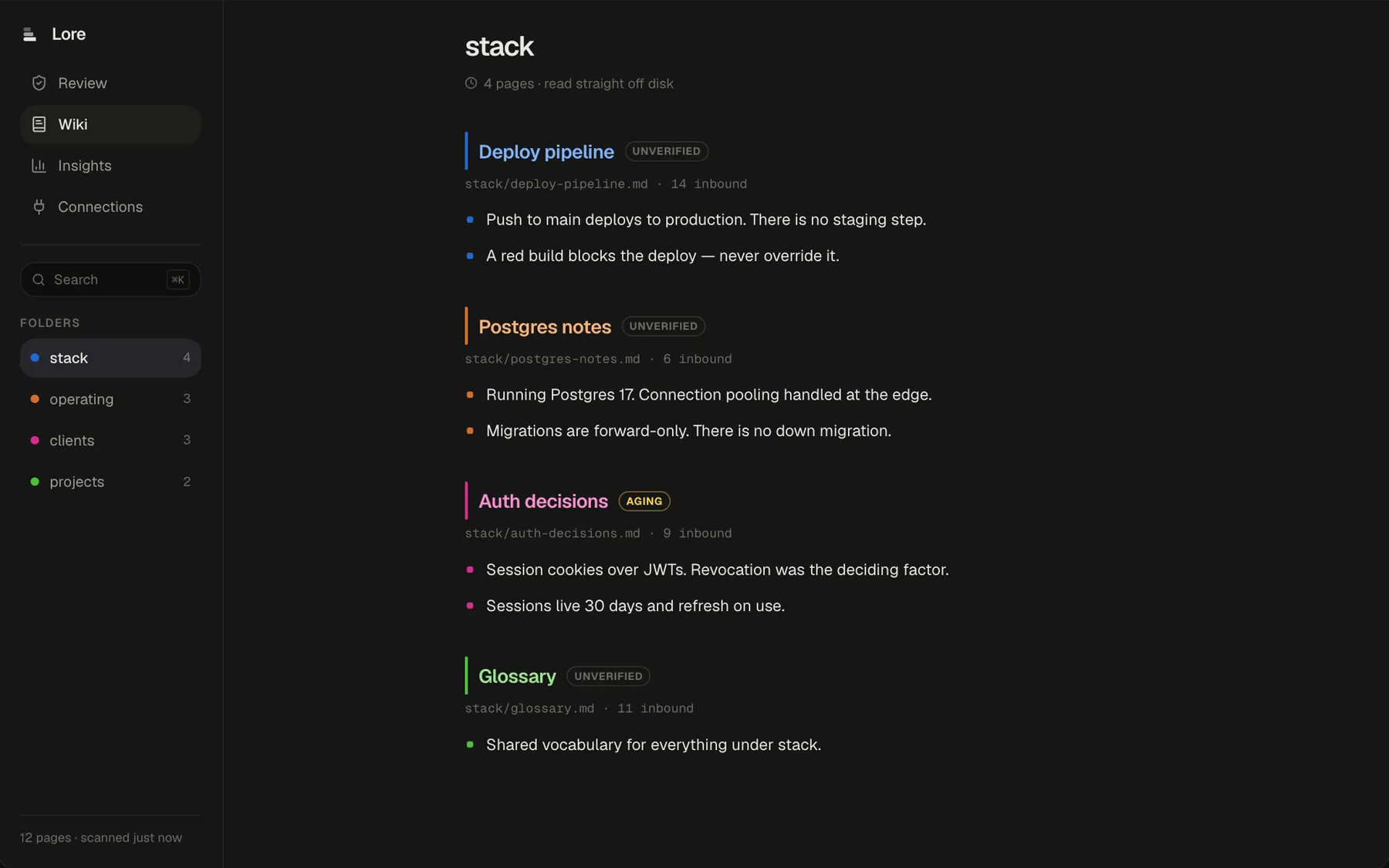
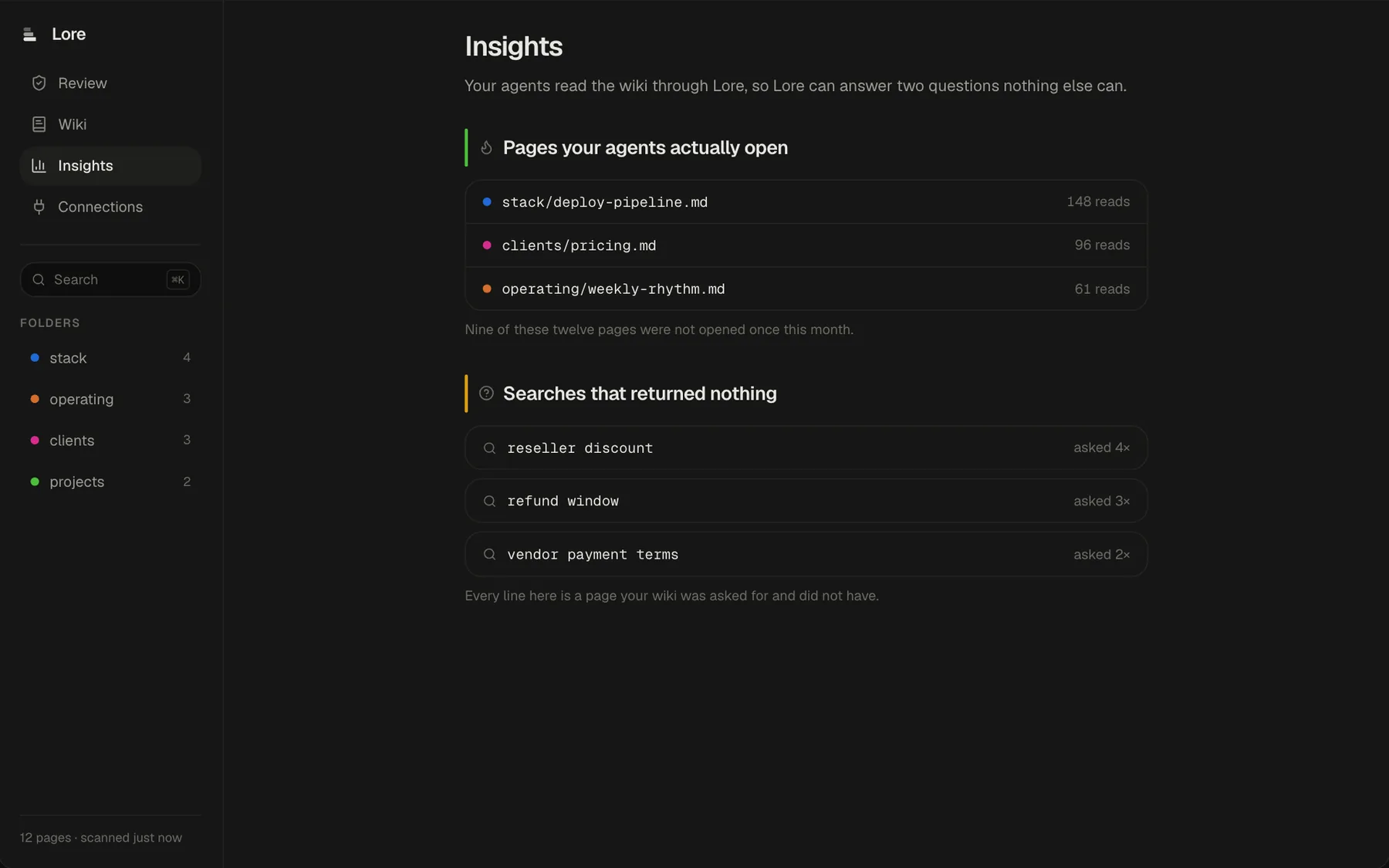
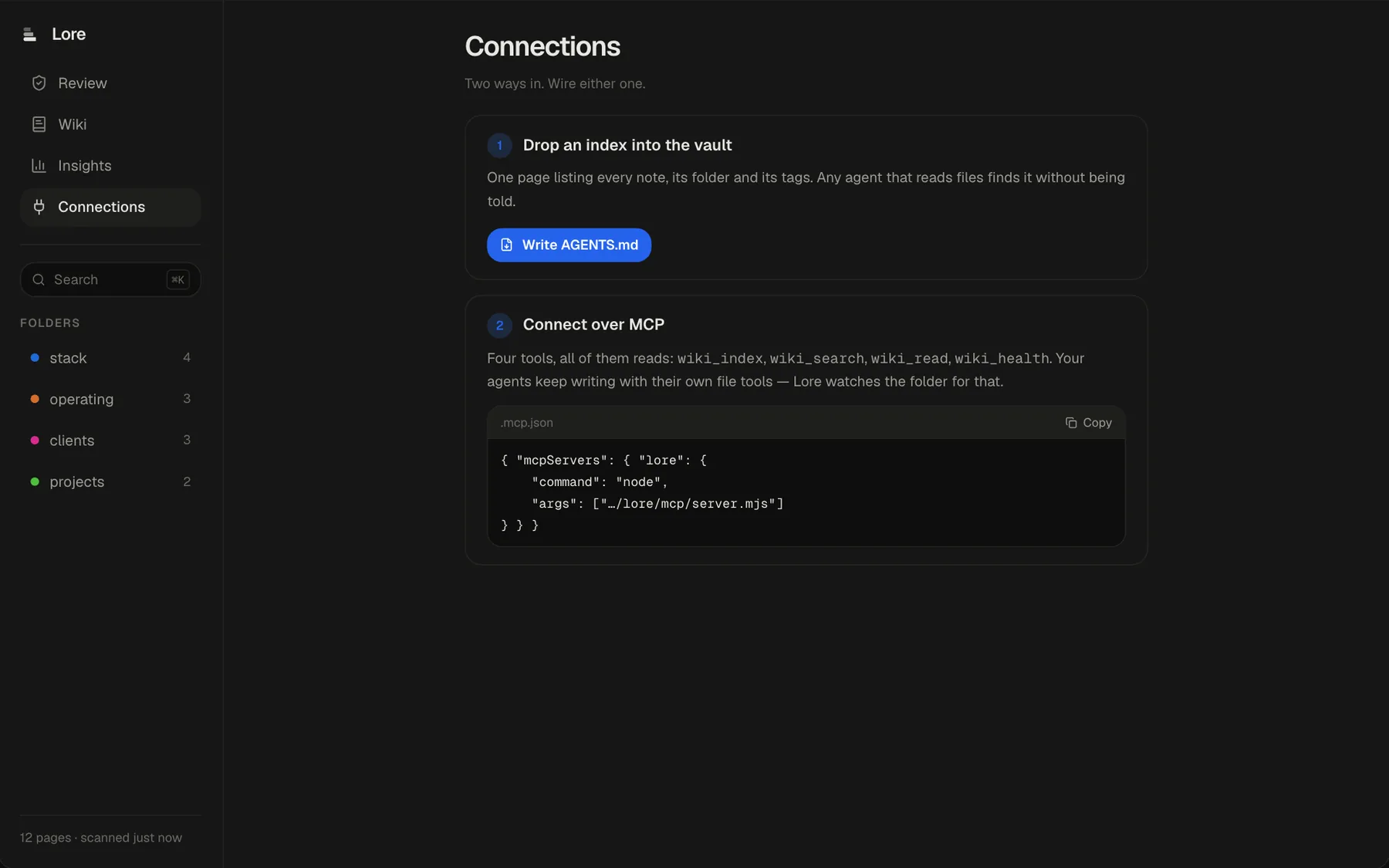
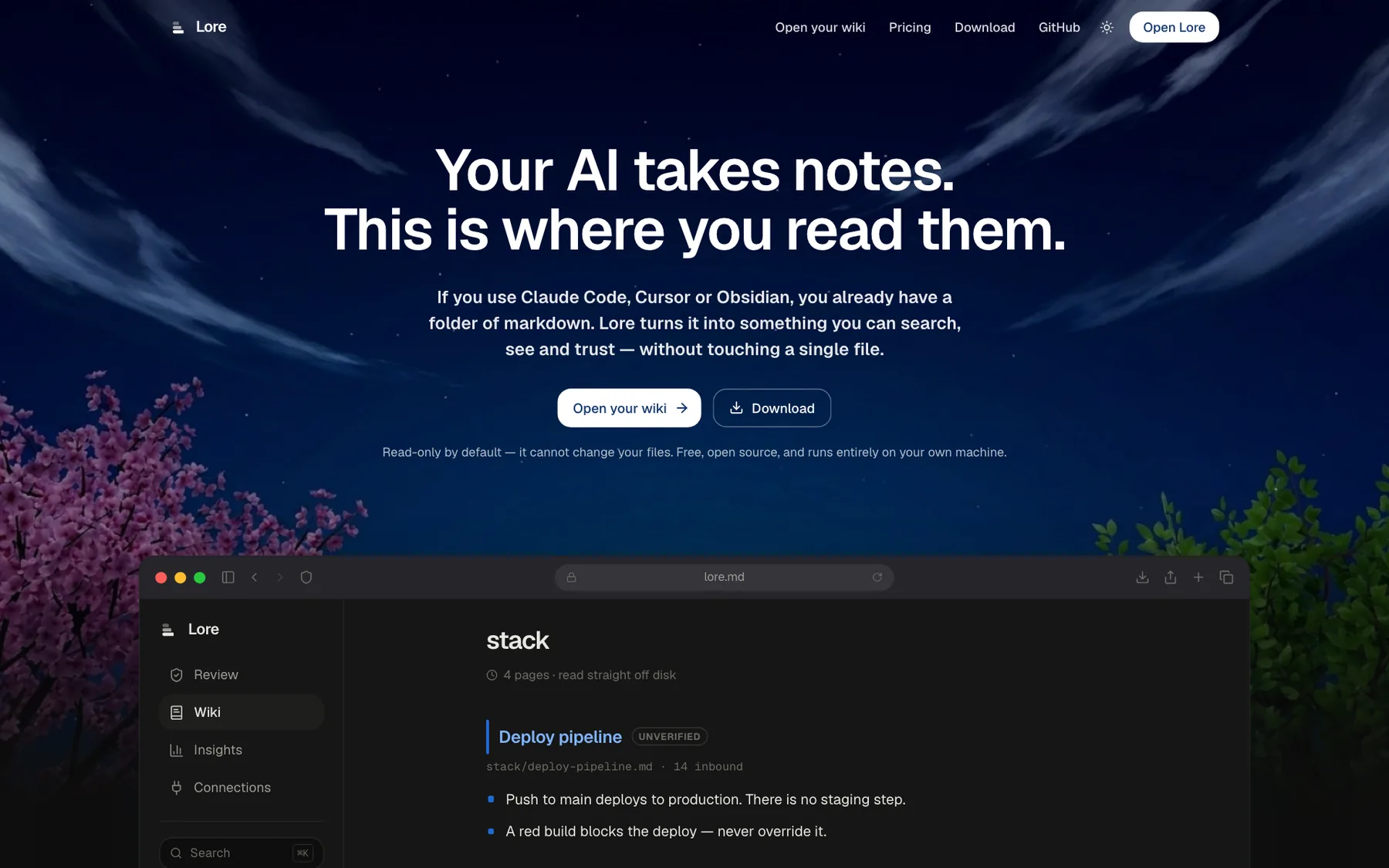
A wiki your agents write to grows faster than you can read it — one measured vault was 1,546 pages taking about 300 writes a week, 56% of it linked from nowhere. Lore assumes you will never read it all, and works anyway. The brief reads what actually changed, the diff rather than the top of the page, and says what is now true in one sentence per page; pages you have already seen fade out, so tomorrow's brief is not today's. Ask answers only from your own pages, cites every passage it used, and says plainly when your wiki does not contain the answer instead of inventing one. A sign-off records what you actually checked and is pinned to the page's content, so when an agent rewrites a verified page it goes straight back to the top of the review list. Lore is read-only by default and never moves, renames or reformats a file; its own state lives outside your vault. Your agents can read the wiki through its MCP server, and the command line can gate CI on dead links and orphans. It opens in a browser tab with nothing uploaded, or as a desktop app for macOS, Windows and Linux, and a local model is optional.
Anyone whose Claude Code, Codex or Cursor sessions write to a folder of markdown — an Obsidian vault, a notes directory — faster than they can read it.
Lore started as the opposite of what it is.
The first version said agents could not write: every edit was a proposal a human had to accept. It could not work — agents write through their own file tools, not through Lore — and a vault taking around 300 changes a week turns an approval queue into a 300-item inbox that resolves to 'accept all' and manufactures confidence nobody earned. So the queue was deleted. Nothing is blocked now: a watcher journals what changed, a triage ranks it by lines deleted, how many pages link in and whether anyone had signed it off, and a person signs off only on what they actually checked. The retrieval is held to a harness in the repo that asks questions generated from real pages and checks whether the right page comes back — on that 1,546-page vault, 80% in the top five against ripgrep's 50%.
Both are for days spent in Claude Code: ArtificialMeter says which subscription has room, Lore reads what the sessions wrote down
Web app
Know the minute a new AI model drops — every provider API swept every 60 seconds
Web · iOS · Game
An arcade-idle bear ranch: hunt, stack the haul, run it to the sell table, upgrade, repeat
Web app
Watched one AI model around the clock and called it the moment it came back — then it did
Web app
One number for your live audience — viewers summed across YouTube, Twitch, and Kick
Web app
A to-do app that takes the power features seriously — natural language, recurrence, focus, review
Web app
Birthday and relationship reminders — the people you love, never forgotten
Web app
A local-only studio for a personal wiki — edit, graph, curate, and capture into it